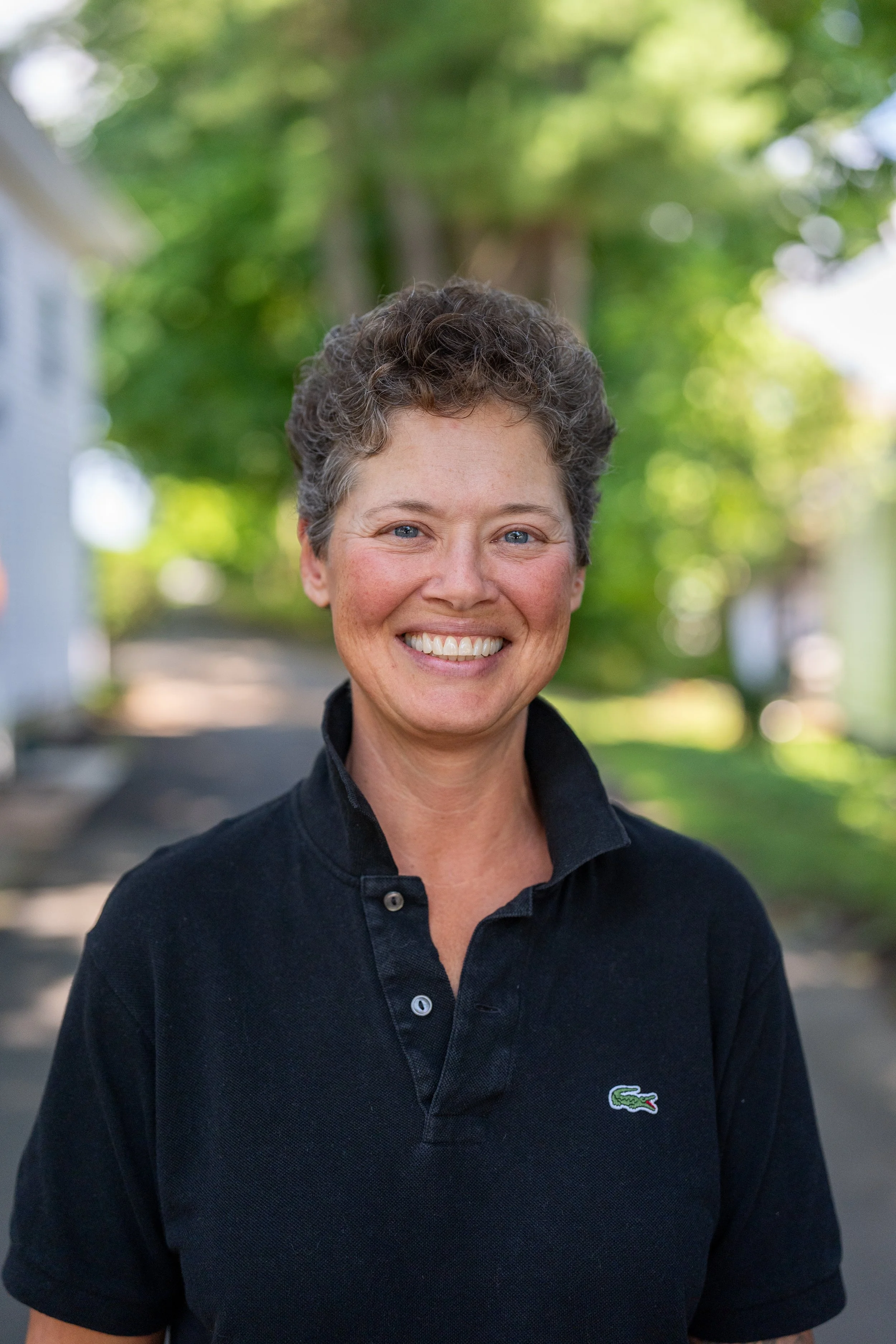
The
Functional
Living
Method™
with Nicole
Somatic Educator · OA Instructor · HMS · Play Zone Pro Coach
For athletes, high achievers, physicians, and health-conscious adults whose breathing, movement, and nervous system patterns are quietly limiting recovery, performance, and ease.
This is not therapy. It is not fitness.
How to access Flow State Naturally
It is tailored 1:1 work that helps retrain chronic bracing, coordination of all 4 diaphragms, and re-educate your body to downshift the stress physiology that no longer serves you.
BRANFORD, CT · TANTIEN INTEGRATIVE MEDICINE
Available in person in Branford, CT and online via secure video, for clients anywhere in the world.
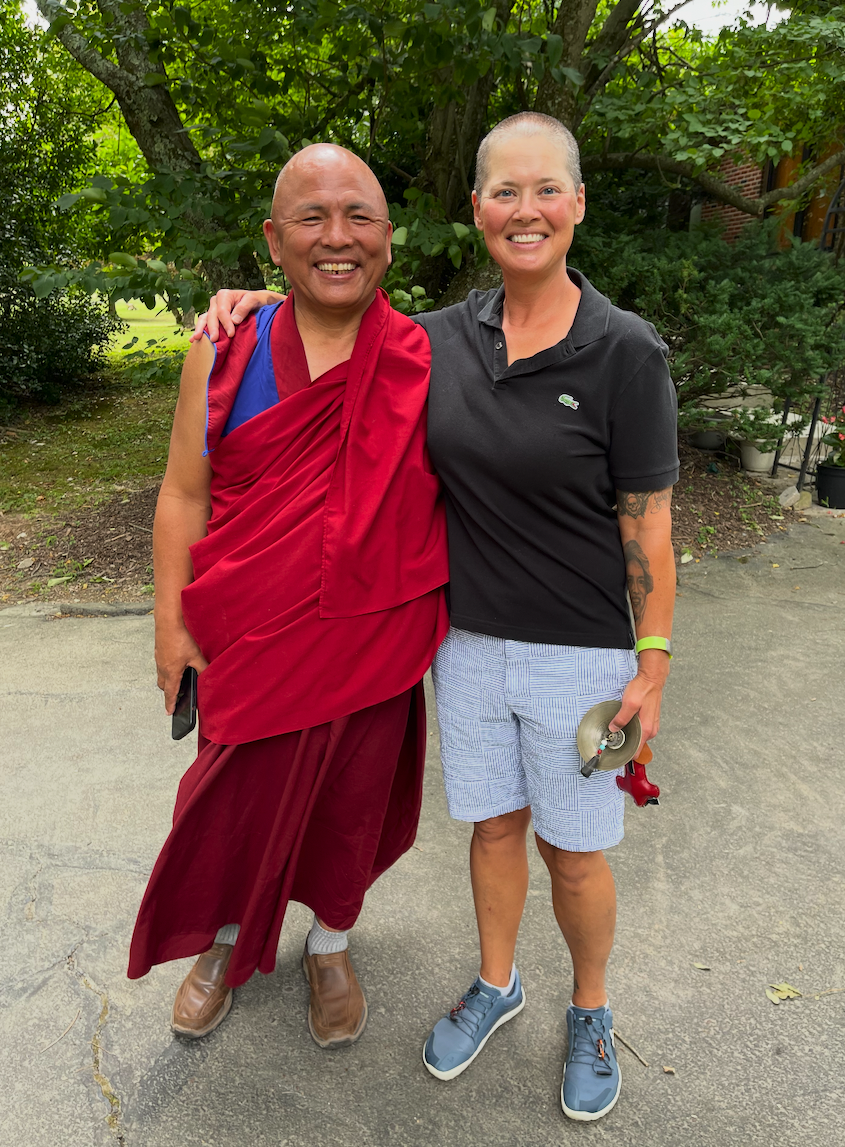
About
“Slow down.”
Two words from an orthopedic surgeon — but not the first time I’d heard them. Family and the people around me had been saying it for a long time. My body had been saying it even longer.
I just didn’t want to listen. Didn’t want to feel what was actually going on.
Because I’d learned what a lot of us learn: that you stuff it down and gut it out. Push through the pain. Suck it up, buttercup.
Slowing down wasn’t a skill I had. It wasn’t even a language I understood. I didn’t have the tools. I didn’t have the support. I didn’t know there was another way.
So I kept overriding it — until my body made that impossible—emergency surgeries, illnesses, and sports injuries.
What finally changed things wasn’t more willpower. It was the opposite: learning to turn toward what my body had been trying to tell me instead of away from it.
That’s where I found what conventional care had never quite reached. It didn’t just change how I felt. It changed how I see the body, health, and what’s possible.
That search sent me deep into the fascia world, applied kinesiology, the bio-mechanical world, polarity therapy (Gary Strauss), energetic body balancing (D'Ambrogio Institute), NMR, NKT, DNA, Body Reading (Anatomy Trains), BodyTalk, somatic movement trainings, sound immersion trainings, spiritually trainings, Play Zone Pro Coach, Somatic Healing Certification, Human Movement Specialist, and Certified Personal Trainer —and the list goes on!
Functional breath work and somatic movement became the foundation everything else rested on, and I built The Functional Living Method™ around them.
My breath work is grounded in the Oxygen Advantage® method, where I’m certified as an Advanced Instructor. My movement work is rooted in Feldenkrais and Hanna Somatics.
I work with people who’ve spent years gutting it out — and whose bodies are done being ignored. If no one ever taught you how to listen, that’s what I’m here for.
I’m also a Reiki Master for humans and animals and Certified RKMRI Medical Reiki Master.
Booking Your Sessions
Already a patient of Dr. Tavernier? Please book your Functional Living Method™ sessions through your patient portal.
Not a patient of Dr. Tavernier's? Welcome — you can book directly with me here on this page.
THE MISSING FOUNDATION
The Foundation Everyone Skips
Rehab strengthens the muscle.
Balance training drills the wobble.
Performance work pushes the output.
Almost none of it trains the system underneath all of them — the nervous, vestibular, and visual systems, and the brain deciding, moment to moment, whether it’s safe to move.
Before we correct the breath and/or movement, we should ask:
What is it trying to do?
That one decision shapes everything downstream:
How you recover from injury or illness
How steady you are on your feet
How well you perform, and how fast you bounce back
How well you age — a body, mind, and spirit that stay functional and capable
That last one is what I mean by longevity. Not more years, necessarily. Better ones — with the quality of life to actually live them.
Functional living, for as long as you’re living.
Train the foundation, and everything built on top of it has somewhere solid to stand.
Access Flow State
Why there are no single sessions
You can’t shortcut this. Breath and movement are patterns your body has run for years, and a pattern takes time to change.
It takes about four weeks to start to notice a real difference, and eight to start embedding it deeply enough that it starts to hold on its own.
So I don’t offer one-off sessions. Everything here is built to last past the last one.
This is the part almost no one talks about.
Before you move, your brain runs a safety check. It reads three things, faster than thought:
• Your inner ear — where you are in space
• Your eyes — what’s around you
• Your muscles and joints — what’s already loaded
Then it decides: safe, or not safe?
When it reads threat, it protects you. It braces. It guards. It changes where your breath goes.
In the moment, that’s your body working exactly as designed. But run that loop for years, and the protection stops being a response. It becomes your default — the way you move, the way you breathe, the pattern you can’t seem to shake.
The tension stops being something happening to you and becomes something stored in you. A habitual pattern your body keeps running long after the reason for it passed.
That’s why stretching doesn’t hold and rest doesn’t reach it. You can’t release from the outside what’s being generated from the inside.
Breath work and somatic movement work at that layer. Not on the muscle. On the signal underneath it.
There is no universal timeline and no guaranteed outcome.
What there is — consistently — is a nervous system with more range, more resilience, and more choice.
Why your body keeps tightening — and why stretching hasn’t fixed it
THREE DOORWAYS IN
What I teach is the ability to shift out of a state instead of getting stranded in one, shift out of tension and pain states, to meet what a day asks of you and actually come back down afterward. It's the thing underneath all three of the doorways I work through. Breath builds it. Movement builds it. Nervous system capacity work builds it. Everything else is a route to the same place.
State Flexibility™
-
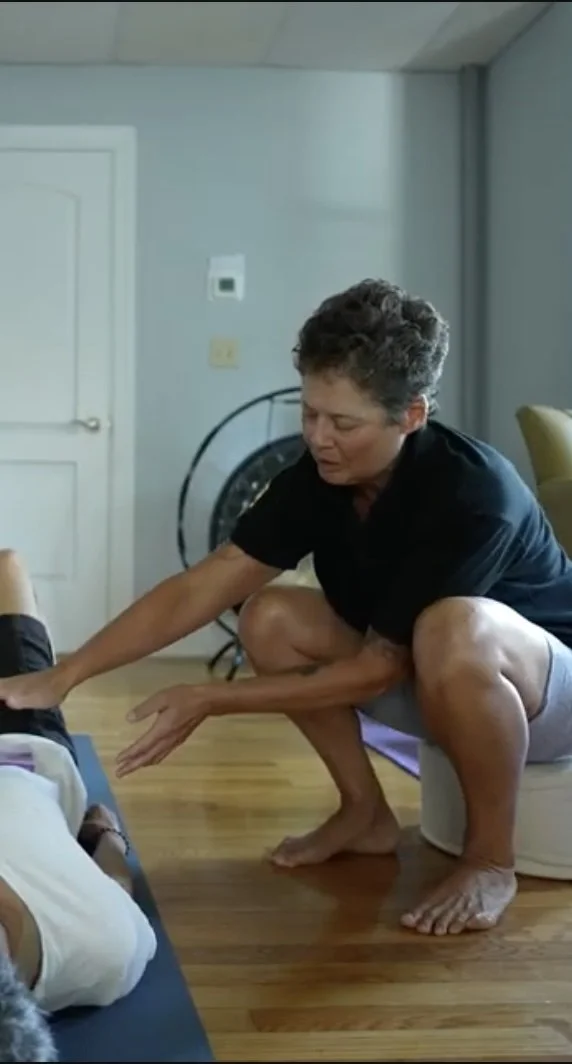
Breath Work
Functional breathwork rooted in the Oxygen Advantage® method. Your breath is the one automatic system you can consciously reach — the fastest way to signal safety to the nervous system. We retrain the chemistry, mechanics, and rhythm of how you breathe, so it settles you instead of running your stress on a loop.
-
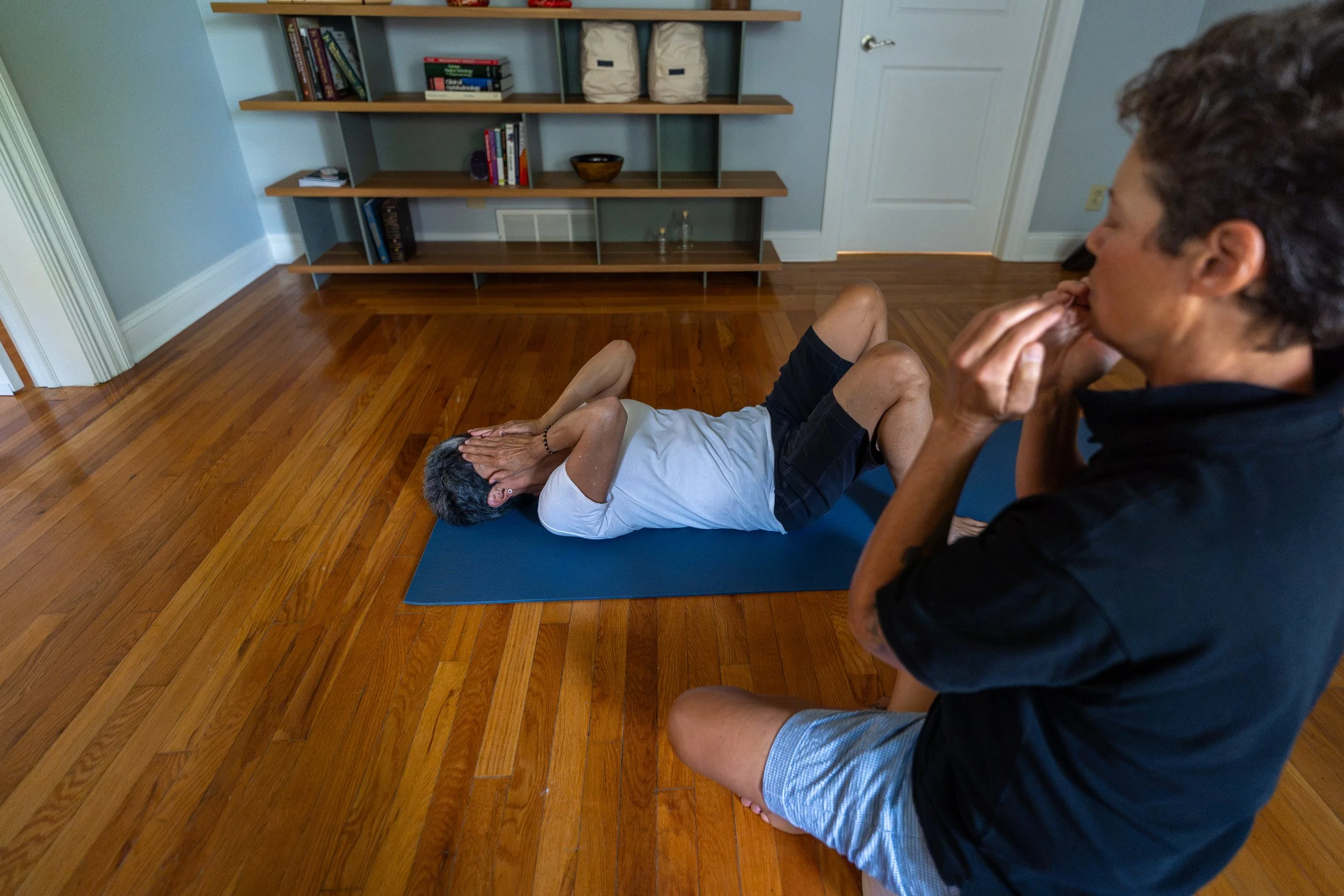
Functional Movement
Somatic movement drawn from Feldenkrais and Hanna Somatics. Not exercise, not stretching. It’s how the brain re-learns a pattern it’s been running on autopilot — updating the vestibular, visual, and motor signals your system uses to decide what’s safe. When those signals change, the body stops guarding.
-
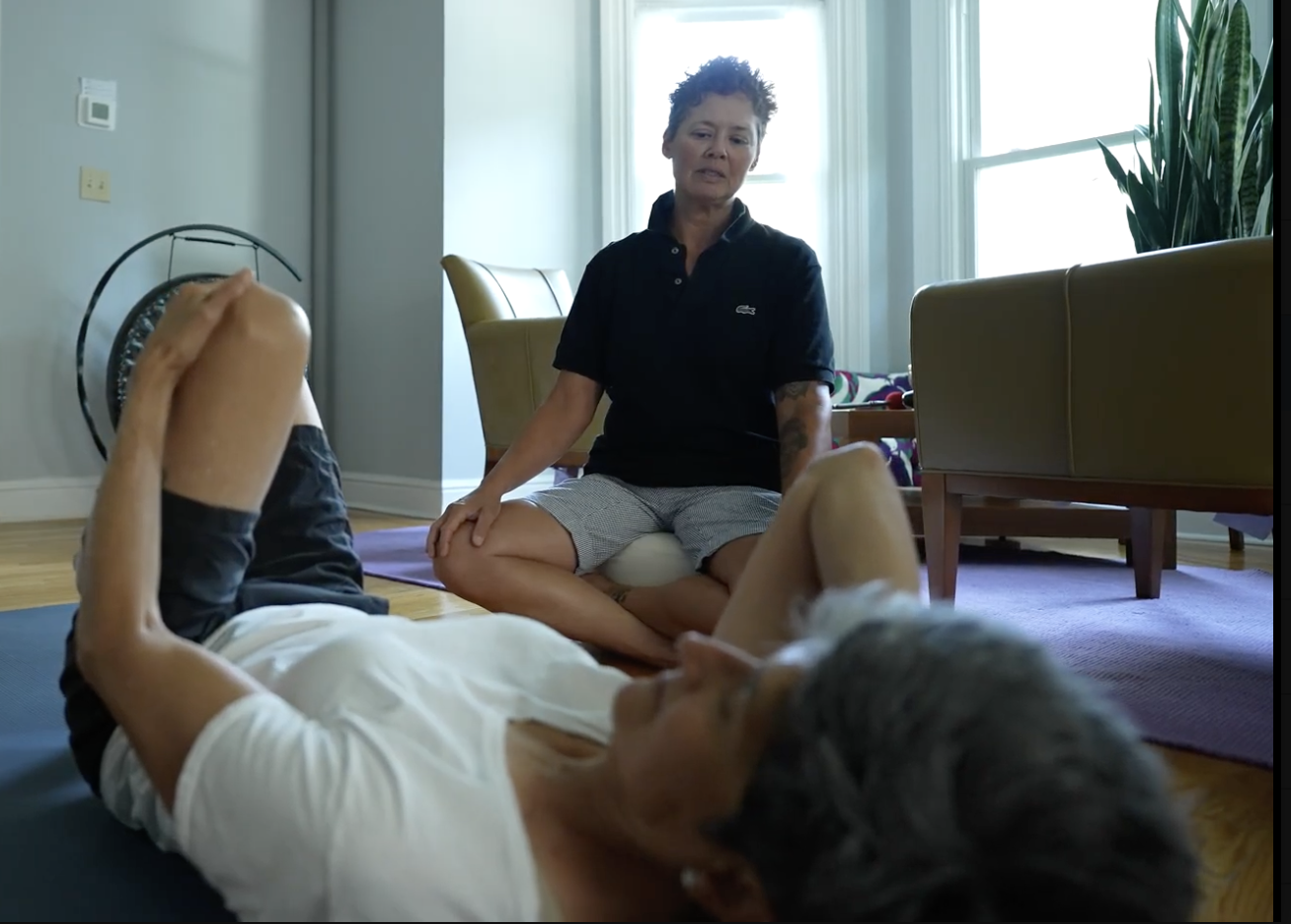
State Flexibility™
Nervous system capacity work using Play Zone Pro Coaching™.
This is where we build capacity and resilience — teaching your system to shift out of a state instead of getting stranded in one.
You learn to feel which state you’re in, meet real demand, and find your way back to steady.
Who Is This Work For
Athletes
Hold efforts closer to threshold with less breathlessness
Faster heart-rate drop between intervals
Warm up without the early "can't catch my breath" wall
See it in your BOLT score and overnight HRV
Physicians
Power down after the shift instead of idling all evening
Release the neck-and-shoulder tension the work leaves
Stay composed under pressure without white-knuckling
Sleep that survives call
High achievers
Train the off-switch so you come down instead of running hot
Composure under pressure that isn't willpower
Steadier energy through the day
Deeper, less fragmented sleep
Anyone ready to do the work
You don’t need the background, just the willingness to learn what’s going on
What Breath work, Somatic Movement, and Nervous System Training Can Help With
Most breathing problems aren't anatomical — they're learned. Your nervous system dictates the motor patterns that drive how you breathe, and when those patterns go off track — chest-dominant breathing, over-breathing, breath-holding under stress — the result is dysfunctional breathing: a mechanical pattern that costs you energy, blunts recovery, and keeps your nervous system on alert. Working with breath mechanics, nervous system regulation, and movement re-education together, we retrain those patterns back toward function.
Below is where clients typically see change.
Faster recovery from stress activation — shifting out of sympathetic overdrive without forcing it
Improved heart rate variability (HRV) and vagal tone through slow, light breathing practice (PMC)
Greater interoceptive awareness — sensing internal state changes before they become reactivity
More flexibility moving between activation and calm, rather than getting stuck in one gear
Reduced chronic tension and anxiety patterns held in the body
Nervous System Regulation & Stress Resilience
Pain, Mobility & Movement Ease
Reduced chronic pain and muscular guarding through Feldenkrais-informed neuromuscular re-education (systematic review, PMC)
Improved range of motion and movement quality without forcing or straining
Unwinding compensatory movement patterns built up over years
Better body awareness — noticing habitual holding patterns before they become pain
Support for recovering functional movement after injury or long periods of inactivity
Breath Mechanics & Physical Performance
Retraining dysfunctional breathing patterns — chest/thoracic-dominant breathing, mouth breathing, over-breathing — back toward efficient, nose-led mechanics
Recognizing breathing as a motor-control pattern driven by the nervous system, not just an anatomical habit, so retraining addresses the root pattern instead of just the symptom
Improved CO2 tolerance and breath efficiency for endurance and exertion
Better recovery between efforts — slow breathing during rest intervals supports faster HRV and parasympathetic recovery (PMC)
Reduced breathlessness and improved pacing under physical or cognitive load
Tools athletes can use in competition, not just in a session
Women's Physiology: Cycle & Life-Stage Support
Nervous system tools that adapt to hormonal shifts across the menstrual cycle
Support through perimenopause and menopause — regulating stress load as physiology changes
Addressing how women's breath and movement patterns differ from generic (often male-normed) programming
Building capacity for chronic tension and anxiety that often intensifies with hormonal transitions
This isn't generic relaxation — it's building a nervous system and a body that can meet real demands, recover well, and stay resilient under pressure. Whether you're an athlete, a physician, a high performer, or navigating a life-stage shift, the work meets you where your physiology actually is.
The difference that makes the difference
A few degrees. That’s often all it takes.
A sailor corrects course by one degree and lands somewhere entirely new. A radio dial moves a hair, and the static becomes a clear signal.
The change is tiny. The outcome isn’t.
Your body works the same way. A 3–5% shift — in how you breathe, how you move, how you hold yourself — sounds too small to matter.
But made at the right layer, where your nervous system decides how to move and breathe, it reorganizes everything built on top of it.
And here’s the part you’ll notice first:
You don’t see a change this small.
YOU FEEL IT.
"To learn we need time, attention, and discrimination; to discriminate we must sense. This means that in order to learn we must sharpen our powers of sensing, and if we try and do most things by sheer force of will we shall achieve precisely the opposite of what we need."
-Dr. Moshe Feldenkrais
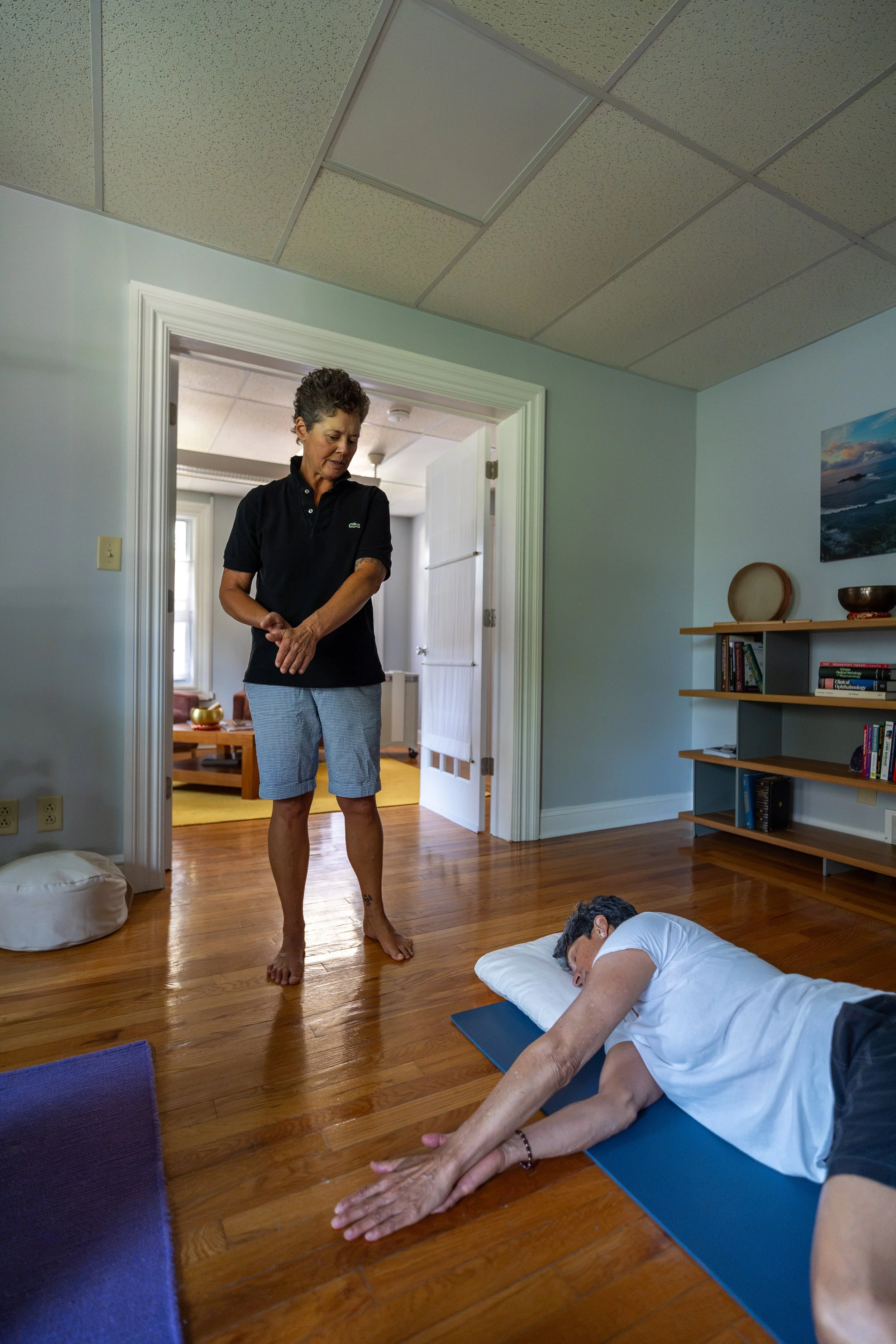
“The aim is to create conditions under which learning takes place, and in which a person feels free! The aim is a body that is organized to move with minimum effort & maximum efficiency, not through muscular strength but through increased consciousness of how it works.”
- Dr. Moshe Feldenkrais
Frequently Asked Questions
-
It is an individualized 1:1 method that combines somatic movement, functional breathwork, and nervous system capacity work to help retrain patterns of tension, inefficient breathing, and state-based stuckness.
-
State Flexibility™ is the ability to shift, adapt, recover, and return to center without getting stuck in overactivation, shutdown, or chronic bracing.
-
Functional breathwork is retraining how you breathe all day — not a breathing exercise you do once and forget. In this practice it's rooted in the Oxygen Advantage® method: lighter, slower, nasal breathing that improves the chemistry, mechanics, and rhythm of your breath. The result is oxygen that actually reaches your tissues, a nervous system that gets the signal it's safe to downshift, and better recovery, sleep, and focus. We use your BOLT score to see where your breathing starts and track it as it changes.
-
This work often fits athletes, high achievers, physicians, and adults dealing with chronic tension, pain, poor recovery, stress overload, breathing dysfunction, or a body that no longer feels adaptable.
-
My prices are listed in the appointment section.
-
Yes. The page states that sessions are available online via secure video for clients anywhere in the world.
-
Yes. Some clients need a more customized approach, especially athletes, physicians, and high-performing professionals with specific goals, timelines, or demands.
Contact Nicole at nicole@tantienim.com
-
You can’t shortcut this. Breath is a pattern your body has run for years, and a pattern takes time to change.
It takes about four weeks to notice a real difference, and eight to embed it deeply enough that it holds on its own.
So I don’t offer one-off sessions. Everything here is built to last past the last one.
Last updated: August 2026